| |
|
|
| |
| |
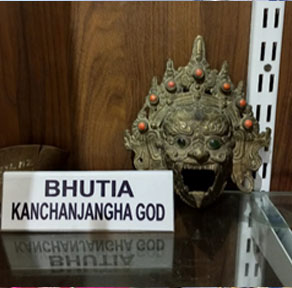
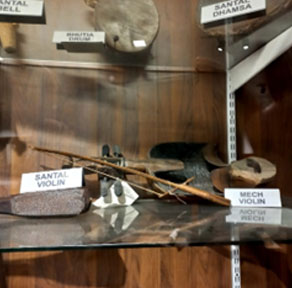
| Collection of Ethnographic Specimen of different tribal groups of West Bengal is displayed at the Ethnography Museum of the Cultural Research Institute. The Museum is holding more than five hundred composite types of specimens for display. Since most of the specimens are bio-degradable, the Institution has undertaken a programme for their preservation. Specimens of the Museum are covering a panoramic view of tribal life style of West Bengal. Preservation as well as storage is done for many artifacts alongwith suitable explanatory notes. The Museum has also taken up a programme for its modernization with the help of digital technology. A permanent Exhibition Gallery is also annexed to the Museum. As a regular work preservation and conservation of museum specimens are done by the museum caretaker and technical assistant. |
| |
| Presently, the artefacts are collected from thirteen (13) tribal groups of West Bengal namely Bhutia, Birhor, Lepcha, Malpaharia, Mech, Mahali, Munda, Oraon, Rabha, Santal, Toto, Bhumij and Kharia. At present thirteen (13) tribal group’s approximately 360 artefacts are displayed in the showcases. Tribal model theme set (spl. ref. to Santal Baha dance model, Santal hunting festival model and Mahali basketry model) was also displayed in the Ethnographic Museum on last March 2016. |
| |
| The collection in this Ethnographic Museum provides lively representation of tribal culture: their techno-economic adaptation, their material culture, religious activities, their music and dance |
| |
| Now, a comprehensive programme for Museum modernization and up-gradation has been taken up. A unique Museum displaying history of different types of boats and its miniature models is under the consideration of the Institute. |
| |
| Puppet Museum: |
| |
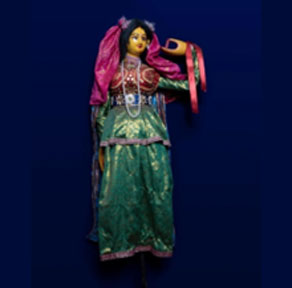
| Folk puppetry is a cultural heritage of West Bengal. Puppetry in West Bengal is called PutulNaach (dancing dolls); Putul is a word that describes a doll and Naach means dance. Puppet Museum was inaugurated on 28th September 2015. Twenty-three (23) nos. of puppet are also displayed in the Museum. |
| |
| Kantha Museum: |
| |
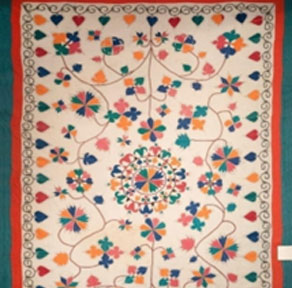
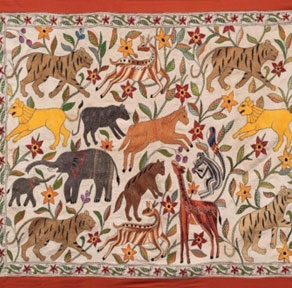
| The Kantha Museum was inaugurated on 28th September 2015 and fourteen (14) nos. of Kantha were displayed in it. Two nos. of Nakshi Kanthas are hundred to hundred fifty years old and rest of the Kanthas are new and these types of Kanthas depicts the stories of deprived section of the society likes1873 movement of dignity, wood carving artisan, Bengali Kabigaan, boat racing, etc. New Kanthas which are made by contemporary Kantha artisans of Birbhum district in West Bengal. |
| |
| Boat Museum: |
| |
| The Boat Museum (The heritage boats of Bengal) was inaugurated on 8th January, 2014 at Cultural Research Institute, Ambedkar Bhavan, Kolkata. The ‘Heritage Boats of Bengal’ is a humble recognition of the cultural heritage of the marginalized classes of West Bengal. The collection includes various types of boat model, made from wood. The Boat Museum contains forty-six (46) scale models of boats and ships dating back to the days of Indus Valley Civilization and covering areas from West Bengal, Orissa, Kerala, Tamil Nadu and Bangladesh. These boats are namely Dingi, Dunga, Chhip, Dholai, Chhot, Kheya, Kosa (fishing), Sultani, Talai, Trawler, etc. of West Bengal and ‘Padma Boat’, Balam, Barki (fishing), Kailebachhari, Kosa, Sampan, etc. of Bangladesh. Moor-Punkee, Feal-Chara, Pinnace, etc. exclusive model boats are also displayed. Luxury ‘House boat’ of Kerala and the Masula boat of Orissa and Tamilnadu are also displayed here. All model boats have been crafted by the Rajbanshi community of Dakshin Dinajpur district of West Bengal. |
| |
|
|
|
| |
| |
| |
|